

SaaS Development Company for Scalable Subscription-Based Products
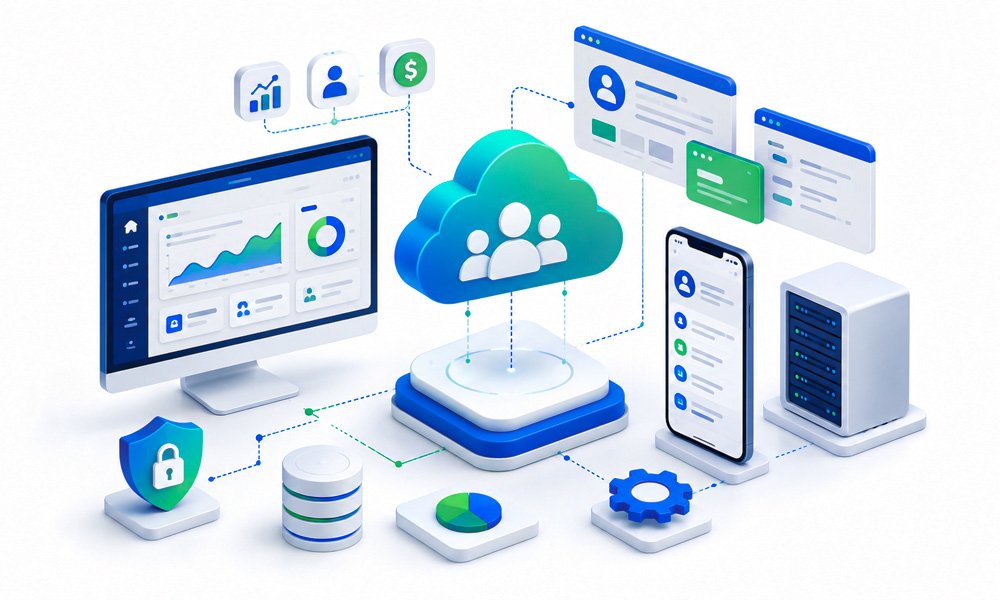
Build SaaS Products Designed to Grow with Your Users and Business
Software-as-a-Service products need more than functional screens and a login page.
A successful SaaS platform needs to support multiple customers, user roles, subscriptions, data isolation, integrations, security, performance, product updates, and continuous growth without creating unnecessary complexity for users or administrators.
HexaLearn provides SaaS development services for organizations building subscription-based software products delivered through the web.
Our approach connects product strategy with technical architecture so that the application is designed around both immediate product requirements and long-term evolution.
We work with businesses to define questions such as:
- Who will use the SaaS product?
- What business problem does it solve?
- Which user roles are required?
- Will multiple organizations use the platform?
- How should tenant data be separated?
- Which subscription plans will be available?
- What functionality belongs to each plan?
- Which integrations are required?
- How will users be onboarded?
- How will usage and billing be managed?
- What happens as customer and data volumes grow?
- Which security requirements apply?
- How will the product continue to evolve after launch?
These decisions influence architecture, database design, APIs, subscription logic, user experience, access control, testing, cloud deployment, and maintenance.
Whether you are developing a new B2B SaaS product, transforming an existing business application into a subscription platform, building an industry-specific SaaS solution, or expanding an existing product, HexaLearn can support the SaaS lifecycle from discovery and architecture through development, deployment, and continuous product enhancement.
What Makes SaaS Development Different from Traditional Software Development?
SaaS products are not simply web applications sold through monthly subscriptions.
The business model affects the way the software needs to be designed.
A traditional internal application may support one organization with a relatively fixed set of users.
A SaaS platform may eventually need to support hundreds or thousands of customer organizations, each with different users, plans, permissions, configurations, and data.
This introduces additional requirements around:
- Multi-tenancy
- Customer onboarding
- Subscription plans
- Billing logic
- Usage management
- Tenant isolation
- User roles
- Feature access
- Scalability
- Product updates
- Customer administration
- Monitoring
- Security
- API integration
- Product analytics
- Support
A strong SaaS architecture considers these requirements before the platform becomes difficult to change.
That is why SaaS development should connect commercial strategy with product and engineering decisions.
Why Businesses Build SaaS Products
The SaaS model allows organizations to deliver software as an ongoing service rather than as a one-time installed product.
For software businesses, SaaS can support recurring customer relationships and continuous product improvement.
For established organizations, SaaS may also provide a way to turn internal expertise, proprietary processes, or existing technology into a scalable digital product.
Businesses may invest in SaaS development to:
- Create subscription-based digital products
- Build recurring revenue models
- Serve customers across locations
- Deliver software through browsers
- Centralize product updates
- Reduce customer-side installation requirements
- Support multiple customer organizations
- Offer tiered service plans
- Expand functionality over time
- Create self-service customer experiences
- Connect third-party systems
- Provide centralized data and reporting
- Build industry-specific digital platforms
- Scale a product without creating separate installations for every customer
The SaaS model also changes the relationship between development and product management.
A SaaS platform is rarely considered "finished."
It needs to evolve continuously based on customer feedback, business priorities, technology changes, and market requirements.
End-to-End SaaS Development Services
As a SaaS development company, HexaLearn supports the technical and product layers required to turn a software concept into a scalable subscription platform.
Services can cover the complete lifecycle or individual stages depending on product maturity.
1. SaaS Product Discovery & Requirement Analysis
SaaS development begins by defining the product before deciding how to build it.
Discovery helps align business goals, user requirements, monetization strategy, and technical feasibility.
Our discovery process may explore:
- Product vision
- Target audience
- Customer types
- User personas
- Business model
- Subscription model
- Core workflows
- User roles
- Tenant requirements
- Functional requirements
- Administrative requirements
- Reporting requirements
- Integration needs
- Data structure
- Security expectations
- Performance requirements
- Scalability requirements
- Future product roadmap
This stage helps distinguish essential functionality from secondary features.
For early-stage SaaS products, development can be prioritized around a minimum viable product while maintaining a clear roadmap for future releases.
For organizations requiring broader software beyond SaaS-specific functionality, our custom software development services can support general business application and enterprise software requirements.
2. SaaS Product Architecture
Architecture is one of the most important decisions in SaaS development.
The platform needs to support current users without creating unnecessary complexity while also providing a realistic path for growth.
Architecture planning may include:
- Application structure
- Frontend architecture
- Backend services
- Database architecture
- Tenant structure
- API architecture
- Authentication
- Authorization
- Subscription logic
- Background processes
- File storage
- Integrations
- Logging
- Monitoring
- Cloud deployment
- Security controls
The architecture should reflect actual product requirements rather than adopting complex patterns simply because they are popular.
A SaaS platform serving a limited number of enterprise customers may have different requirements from a high-volume self-service SaaS product.
The objective is to create a technical foundation that supports the business model.
3. Multi-Tenant SaaS Architecture
Multi-tenancy allows a SaaS platform to support multiple customer organizations through a shared application environment.
Each customer organization may be treated as a tenant.
A tenant may contain:
- Users
- Roles
- Data
- Settings
- Permissions
- Subscription plan
- Branding
- Configurations
- Reports
- Workflows
One of the most important considerations is ensuring that users can only access information belonging to the appropriate tenant.
Multi-tenancy planning may address:
- Tenant identification
- Tenant-level access
- User membership
- Role management
- Data isolation
- Tenant configuration
- Feature availability
- Custom settings
- Branding
- Resource usage
- Reporting
Different data isolation strategies may be appropriate depending on the sensitivity of the information, customer requirements, scale, and architecture.
Multi-tenancy should therefore be planned deliberately rather than added after the product has already been developed.
4. SaaS User & Organization Management
SaaS products often support users within customer organizations.
A single tenant may contain administrators, managers, employees, viewers, external users, or other roles.
User management may include:
- Registration
- Invitations
- Login
- Password management
- Organization creation
- User profiles
- Role assignment
- Permission management
- User activation
- User deactivation
- Team management
- Account settings
- Tenant administrators
The user model should reflect how customers actually use the product.
For example, a B2B SaaS application may need an organizational administrator who can invite additional users and manage permissions independently.
A learning SaaS product may require instructors, learners, managers, and administrators.
A CRM SaaS platform may require sales representatives, managers, and administrators.
These structures should be defined early because they affect both product experience and data access.
5. Subscription Management
Subscription logic is a defining part of many SaaS products.
Different customers may have access to different features based on their plan.
Subscription management can include:
- Free trials
- Monthly subscriptions
- Annual subscriptions
- Plan upgrades
- Plan downgrades
- Renewals
- Cancellations
- Trial expiration
- Seat-based pricing
- Usage-based rules
- Feature limits
- User limits
- Storage limits
- Add-ons
- Billing status
The exact model depends on the SaaS business strategy.
Subscription logic should be structured so that plan changes can be managed without creating unnecessary development work.
For example, functionality may need to determine whether a tenant has access to:
- Advanced reports
- Additional users
- Premium integrations
- Administrative controls
- API access
- Storage
- Custom branding
- Automation features
Separating subscription rules from core application logic can help make product packaging easier to evolve.
6. Billing & Payment Integration
Many SaaS platforms require integration with external payment providers rather than building payment processing from scratch.
Payment integration may support:
- Subscription purchase
- Renewal
- Plan changes
- Payment status
- Failed payments
- Invoices
- Billing history
- Tax-related data where applicable
- Customer billing details
The SaaS application may need to synchronize subscription status with the payment provider.
For example, when a payment succeeds, a plan may remain active.
If a subscription expires or is cancelled, access may need to change according to business rules.
This logic needs to be tested carefully because billing status can directly affect product access and customer experience.
7. SaaS Frontend & Product Experience
The frontend is where customers experience the SaaS product.
A SaaS interface needs to support both usability and product adoption.
Customers should be able to understand:
- How to start
- Where important functionality lives
- What actions are available
- How to complete common workflows
- What their account status is
- What information belongs to them
- How to manage settings
- Where to find help
Frontend development may include:
- Dashboards
- Navigation
- Forms
- Search
- Filters
- Reports
- Tables
- Data visualization
- Account settings
- Subscription views
- Notifications
- User management
- Tenant administration
- Responsive interfaces
For browser-based SaaS interfaces, HexaLearn's broader web application development services can support complex frontend and backend web application requirements.
8. SaaS Backend Development
The backend manages the business logic behind the product.
Depending on the platform, backend functionality may include:
- Authentication
- Authorization
- Tenant management
- User roles
- Subscription logic
- Business workflows
- Data processing
- Notifications
- Billing events
- Reporting
- API services
- File management
- Integrations
- Administrative functionality
- Background processing
Backend architecture needs to support both customer-facing workflows and product administration.
For example, a SaaS product may provide one experience to tenant users and another to the platform's own internal administrators.
The backend needs to support both securely.
9. API Development for SaaS Products
APIs allow SaaS platforms to connect with external systems and enable customers to integrate the product into their own technology environments.
API capabilities may include:
- User data
- Account data
- Reporting
- Transactions
- Notifications
- Content
- Workflow updates
- Customer records
- Product functionality
API development should account for:
- Authentication
- Authorization
- Validation
- Rate limits
- Error handling
- Logging
- Versioning
- Documentation
- Security
- Data formats
For SaaS businesses targeting enterprise customers, API availability can become an important product capability because larger organizations often require integration with internal platforms.
A structured API strategy also makes it easier to connect web, mobile, and third-party applications to the same SaaS backend.
10. Third-Party SaaS Integrations
Customers rarely use one software platform for every business process.
A SaaS product may therefore need to integrate with other applications.
Potential integrations may include:
- CRM systems
- Email platforms
- Communication tools
- Learning Management Systems
- Payment providers
- Analytics platforms
- Authentication services
- Accounting software
- Cloud storage
- Customer support systems
- Webhooks
- Internal enterprise applications
Integration requirements should be based on actual customer workflows.
Important questions include:
- What data needs to move?
- Which system owns the data?
- How frequently should information synchronize?
- Should updates be real-time?
- What happens if an external system becomes unavailable?
- How are failures retried?
- What permissions are required?
Strong integration design makes the SaaS product easier to fit into customers' existing technology ecosystems.
11. SaaS Database Architecture
SaaS products often accumulate significant amounts of customer and application data over time.
Database design affects:
- Data isolation
- Performance
- Reporting
- Search
- Scalability
- Tenant management
- Data relationships
Planning may include:
- Tenant data
- User data
- Product data
- Subscription data
- Activity history
- Audit information
- Application settings
- Reporting data
- Integration records
- Notifications
- Files
Data models need to reflect how the product operates while making future changes manageable.
A database structure designed around a single customer environment may become difficult to scale into a multi-tenant SaaS product.
That is why tenancy and growth should be considered from the beginning.
12. SaaS Security
SaaS platforms may process business-critical customer data and provide access to multiple organizations through the same application.
Security therefore needs to influence architecture, development, APIs, data design, and operations.
Security considerations may include:
Tenant Isolation
Ensuring one tenant cannot access another tenant's data.
Authentication
Verifying user identity.
Authorization
Controlling what users are allowed to access.
Role-Based Access
Restricting actions based on responsibilities.
Secure API Communication
Protecting data exchanged through APIs.
Input Validation
Validating information submitted through application interfaces and integrations.
Session Management
Managing user sessions according to product requirements.
Sensitive Configuration
Protecting credentials and environment-specific configuration.
Logging
Recording appropriate events for troubleshooting and security monitoring.
Dependency Management
Keeping application dependencies appropriately maintained.
Security Updates
Addressing identified security-related issues as the product evolves.
Security requirements vary depending on the type of SaaS product and data involved.
They should be identified during product discovery rather than treated as a final-stage checklist.
13. SaaS Administration Platform
SaaS businesses often need an internal administrative interface separate from the customer-facing product.
The platform team may need to manage:
- Tenants
- Users
- Subscription status
- Plans
- Features
- Support requests
- Account status
- Usage
- Integrations
- Product settings
Administrative dashboards may also provide visibility into:
- Active tenants
- Trial accounts
- Subscription plans
- Product usage
- Account activity
- Customer growth
- Failed processes
- Support issues
Internal administration capabilities should be designed carefully because they can provide broad access across customer accounts.
Role-based access is therefore especially important.
14. SaaS Dashboards & Reporting
SaaS applications frequently need dashboards for both customers and product owners.
Customer Dashboards
May display:
- Usage
- Activity
- Team information
- Performance
- Business metrics
- Tasks
- Account status
- Subscription information
SaaS Operator Dashboards
May display:
- Active accounts
- New subscriptions
- Trial conversions
- Customer activity
- Plan distribution
- Product usage
- Tenant growth
- System health
Dashboards should answer meaningful questions rather than simply display every available metric.
15. Cloud Deployment for SaaS Products
SaaS products need a reliable environment in which customers can access the application.
Cloud deployment can support:
- Application hosting
- Database hosting
- File storage
- Background processing
- Monitoring
- Backup strategies
- Scaling
- Environment management
Deployment environments may include:
- Development
- Testing
- Staging
- Production
Keeping environments separated helps reduce the risk of development activities affecting live customers.
Deployment planning should also account for:
- Application configuration
- Database migrations
- Release validation
- API configuration
- Monitoring
- Rollback planning
- Production checks
The specific cloud architecture should be selected according to product requirements rather than generic assumptions.
16. Building SaaS Products for Scalability
SaaS growth can create several different types of load.
Growth may mean:
- More customer organizations
- More users per tenant
- Higher concurrent traffic
- Larger databases
- Increased file storage
- More API requests
- More background jobs
- More reports
- More integrations
- More transactions
Scalability planning may influence:
- Application architecture
- Database structure
- Caching
- API design
- Background processing
- File handling
- Infrastructure
- Monitoring
- Search
- Reporting
The objective is not to build an unnecessarily complex architecture for hypothetical scale.
It is to identify realistic growth patterns and create a product foundation that can evolve.
17. SaaS Performance
Performance directly affects customer experience.
Users may notice:
- Slow dashboards
- Delayed searches
- Long report generation
- Slow page transitions
- Delayed API responses
- Timeout errors
Performance can be affected by:
- Database queries
- API design
- Application architecture
- Frontend behavior
- External integrations
- Large data volumes
- Background processes
- Infrastructure
Performance planning should focus on the most important workflows.
For example, a reporting SaaS platform may prioritize large data queries, while a workflow product may prioritize fast transaction processing.
18. SaaS Quality Assurance & Testing
SaaS applications need to be tested across both customer-facing and platform-level functionality.
Testing may include:
Functional Testing
Validating product features against requirements.
Multi-Tenant Testing
Ensuring tenant-specific data and functionality remain correctly separated.
Role & Permission Testing
Validating user access across different roles.
Subscription Testing
Checking plan access, upgrades, downgrades, trial behavior, renewals, and cancellations.
API Testing
Validating requests, responses, authentication, permissions, and errors.
Integration Testing
Checking external platform connections.
Database Validation
Verifying data storage, updates, and tenant relationships.
Regression Testing
Rechecking existing functionality after product changes.
Responsive Testing
Validating supported browser and device behavior.
For broader software quality requirements, HexaLearn's QA and software testing services can support SaaS testing across different product layers.
19. SaaS Maintenance & Support
SaaS products are ongoing services.
Once customers begin using the platform, the product needs continued maintenance.
Support requirements may include:
- Bug fixes
- Security-related updates
- Integration changes
- API updates
- Database improvements
- Performance improvements
- Dependency updates
- Browser compatibility
- Administrative enhancements
- Reporting improvements
- Subscription changes
- Cloud configuration changes
Maintenance helps keep the product aligned with both technical requirements and customer expectations.
20. Continuous SaaS Product Evolution
One of the biggest differences between SaaS and traditional project-based software is continuous product evolution.
SaaS companies learn from customer behavior over time.
Users request new workflows.
Market expectations change.
Competitors introduce new capabilities.
New integrations become important.
Pricing models evolve.
This means product development should support ongoing prioritization rather than treating the first release as the final product.
Product evolution may include:
- New features
- Improved onboarding
- Updated subscription plans
- Additional integrations
- New dashboards
- Better reporting
- Automation
- Administrative tools
- Mobile applications
- API capabilities
- New tenant configurations
- UI/UX improvements
A structured roadmap helps balance customer requests with technical sustainability.
MVP Development for SaaS Products
Many SaaS products should not attempt to build every planned feature before reaching users.
An MVP can focus on validating the most important assumptions.
An initial release may prioritize:
- Authentication
- Core workflow
- Tenant management
- Essential user roles
- Basic subscription logic
- Core dashboard
- Required integrations
- Administrative functionality
Secondary features can then be added based on feedback and product priorities.
The objective of an MVP is not simply to build less software.
It is to identify the smallest product capable of validating meaningful customer value.
SaaS Product Modernization
Organizations may already operate a software product that needs to transition toward a SaaS model.
Examples include:
- Legacy installed software
- Single-tenant applications
- Internal business tools
- Older customer portals
- Products with manual account setup
- Products without subscription management
Modernization may involve:
- Multi-tenant architecture
- Browser-based interfaces
- Subscription management
- Cloud deployment
- API development
- User management
- Product administration
- Database restructuring
- UI/UX improvements
- Security enhancements
- Scalability improvements
The migration strategy should account for existing users and data rather than simply rebuilding the application without continuity planning.
SaaS Products Connected to Mobile Applications
Some SaaS products benefit from mobile experiences alongside the primary browser-based platform.
Examples may include:
- Field service SaaS
- Learning platforms
- Customer service tools
- Sales platforms
- Workforce applications
- Collaboration products
A mobile application can connect to the same backend and APIs while providing a device-specific user experience.
For SaaS products requiring iOS or Android applications, our mobile app development services can support connected mobile product experiences.
SaaS CRM Products
CRM platforms are a common SaaS category.
Organizations developing a specialized CRM SaaS product may need:
- Accounts
- Contacts
- Leads
- Opportunities
- Pipelines
- Activities
- Automation
- Dashboards
- Reporting
- Multi-tenancy
- Subscription management
For projects specifically centered on customer relationship management, our custom CRM development servicesprovide deeper CRM-focused capabilities.
SaaS Products for Learning & Training
SaaS models can also support learning platforms, training administration, assessments, learner management, and customer education.
A learning-focused SaaS product may require:
- Organizations
- Learners
- Administrators
- Content
- Assessments
- Reports
- Subscription access
- Course entitlements
- User progress
- Learning integrations
Where the requirement centers specifically on Learning Management Systems, HexaLearn's Moodle LMS development services can support customized learning-platform requirements.
Our SaaS Development Process
A structured product development process helps connect commercial goals with technical execution.
Phase 1: Product Discovery
We clarify:
- Product vision
- Users
- Customer segments
- Business model
- Core problem
- SaaS workflows
- Subscription model
- Required integrations
- Security expectations
- Future roadmap
Phase 2: Requirements & MVP Planning
Features are prioritized according to product value and development requirements.
The team can distinguish:
- Essential MVP functionality
- Secondary functionality
- Future roadmap items
Phase 3: SaaS Architecture
We plan:
- Application architecture
- Multi-tenancy
- Database structure
- APIs
- Subscription logic
- User roles
- Security
- Integrations
- Cloud environment
Phase 4: UI/UX Design
User journeys, dashboards, workflows, account management, and administration interfaces are designed.
Phase 5: Frontend Development
Approved product interfaces are transformed into responsive application components.
Phase 6: Backend Development
Business logic, user management, tenancy, subscriptions, APIs, workflows, and other backend capabilities are developed.
Phase 7: Integrations
Required payment, authentication, business, and third-party platforms are connected.
Phase 8: QA & Validation
Product functionality, tenants, roles, subscriptions, APIs, integrations, and customer workflows are tested.
Phase 9: Cloud Deployment
The SaaS platform is prepared for production deployment.
Phase 10: Product Launch
The product is validated in production and initial users or customers are onboarded according to the agreed launch approach.
Phase 11: Maintenance & Product Evolution
The platform continues to evolve through updates, enhancements, new integrations, and roadmap development.
Why Choose HexaLearn for SaaS Development?
Building SaaS products requires understanding both software engineering and ongoing product requirements.
SaaS-Specific Planning
Architecture considers tenancy, subscriptions, users, product access, and future growth.
Product-First Development
Development priorities are connected to real user and business requirements.
Multi-Tenant Architecture
SaaS environments can be designed around multiple customer organizations and tenant-specific data.
Subscription Management
Product access can be structured around different pricing and entitlement models.
API & Integration Development
SaaS platforms can connect with external business systems and provide integration capabilities for customers.
Cloud Deployment
Applications can be prepared for cloud-based SaaS delivery.
Security-Focused Development
Authentication, authorization, tenant separation, APIs, and data access are considered throughout development.
Continuous Quality Assurance
Testing covers product workflows, subscription logic, permissions, integrations, and tenant behavior.
Product Evolution
The SaaS platform can continue to evolve as the customer base, product strategy, and market requirements change.
SaaS Development Across Different Product Types
SaaS development can support a wide range of business models.
B2B SaaS Platforms
Software sold to organizations with multiple users, roles, and administrative requirements.
Industry-Specific SaaS
Platforms designed around specialized processes within sectors such as learning, professional services, manufacturing, healthcare, or customer management.
Workflow SaaS
Products focused on requests, approvals, tasks, operations, and process management.
Analytics SaaS
Platforms designed around reporting, dashboards, business intelligence, or structured data access.
CRM SaaS
Customer, sales, opportunity, and engagement management platforms.
Learning SaaS
Learning, assessment, administration, or workforce development platforms.
Customer Service SaaS
Products that support cases, requests, communication, or customer operations.
Collaboration SaaS
Tools designed around shared work, resources, communication, or project workflows.
The technical architecture should reflect the business model and user needs of the specific product.
SaaS Engagement Models
Different SaaS products require different development approaches.
MVP Development
Suitable for validating core product functionality and early market demand.
Fixed-Scope Development
Appropriate when product requirements and deliverables are clearly defined.
Time & Material Development
Suitable for evolving SaaS products where priorities may change during development.
Dedicated SaaS Team
Useful for ongoing product development, maintenance, integrations, and roadmap execution.
Phased SaaS Development
Large products can be divided into structured releases.
For example:
Phase 1: Core product + users + tenants
Phase 2: Subscriptions + integrations + dashboards
Phase 3: Advanced automation + APIs + enterprise features
This allows product development to evolve according to market and customer feedback.
Frequently Asked Questions
1. What is SaaS development?
SaaS development is the process of designing and building software delivered as an ongoing online service, often using subscription-based access and supporting multiple users or customer organizations through a centralized platform.
2. What SaaS development services does HexaLearn provide?
HexaLearn can support product discovery, architecture, multi-tenancy, UI/UX, frontend and backend development, subscriptions, APIs, integrations, databases, cloud deployment, testing, maintenance, and continuous product development.
3. Can you develop a SaaS product from scratch?
Yes. SaaS products can be developed around new product concepts, defined customer needs, user workflows, subscription models, and technical requirements.
4. Can you build multi-tenant SaaS applications?
Yes. Multi-tenant architecture can support multiple customer organizations while applying appropriate tenant identification, user access, configurations, and data separation.
5. Can different SaaS customers have different subscription plans?
Yes. Subscription logic can be designed around different plans, feature access, user limits, usage rules, trials, upgrades, downgrades, renewals, or add-ons depending on the business model.
6. Can SaaS software integrate with payment providers?
Yes. Subscription and billing workflows can integrate with appropriate external payment platforms depending on product requirements.
7. Can you develop APIs for our SaaS product?
Yes. APIs can support external integrations, customer access, mobile apps, web applications, and other platform capabilities.
8. How do you handle SaaS security?
Security requirements can include tenant isolation, authentication, authorization, role-based access, secure APIs, data validation, session management, application configuration, logging, and security-related maintenance.
9. Can you deploy SaaS products to the cloud?
Yes. SaaS platforms can be prepared for cloud deployment according to application, database, infrastructure, performance, security, and scalability requirements.
10. Can SaaS software scale as the customer base grows?
Scalability can be considered during architecture to support growth in tenants, users, data, requests, integrations, and application workloads.
11. Do you provide SaaS maintenance?
Yes. Ongoing support can include bug fixes, updates, integrations, performance improvements, security-related changes, product enhancements, and technical maintenance.
12. Can you help develop an MVP for a SaaS startup?
Yes. SaaS development can begin with an MVP focused on core workflows, users, tenancy, subscription logic, and essential product features.
13. Can an existing software product be converted into SaaS?
Potentially. The feasibility depends on the existing architecture. Migration may involve multi-tenancy, browser-based interfaces, subscription management, cloud deployment, APIs, user management, and database restructuring.
14. Can SaaS products have mobile applications?
Yes. Mobile applications can connect to the SaaS platform through shared backend services and APIs.
15. How is SaaS development different from web application development?
Web application development focuses on browser-based applications generally. SaaS development adds product requirements such as multi-tenancy, subscription management, tenant administration, recurring service delivery, SaaS scalability, and continuous product evolution.
16. How is SaaS development different from custom software development?
Custom software development is a broader category covering specialized business software. SaaS development specifically focuses on software delivered as a recurring online service to multiple customers or users.
17. How do we start a SaaS project with HexaLearn?
The process begins by defining the product idea, target users, business model, core workflows, subscription strategy, tenancy needs, integrations, security requirements, expected scale, and roadmap.
Ready to Turn Your Product Idea into a Scalable SaaS Platform?
Building a SaaS product means planning for more than the first release.
The platform needs to support customers today while providing a foundation for subscriptions, new features, integrations, additional users, product updates, and future growth.
Whether you are launching a new SaaS product, developing an MVP, modernizing an existing software platform, introducing a subscription model, or expanding an established SaaS application, HexaLearn can help translate your product requirements into a structured development roadmap.
Our SaaS development services can support the complete product lifecycle:
Discovery → SaaS Architecture → Multi-Tenancy → UI/UX → Development → Subscriptions → APIs → Security → Cloud Deployment → Scaling → Maintenance → Product Evolution
Build a SaaS platform around the customers you want to serve and the product you want to grow.
Schedule a demo with our eLearning experts.