

Deliver seamless, engaging, accessible, and error-free digital learning experiences across devices, browsers, LMS platforms, and learning environments.
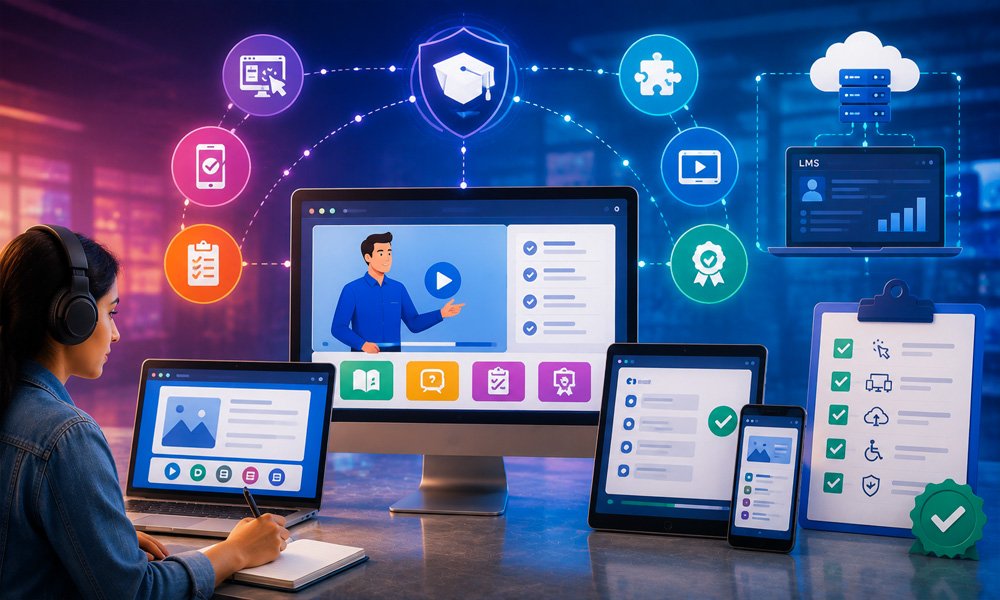
Modern organizations invest heavily in digital learning to train employees, partners, customers, and learners. But even well-designed eLearning content can fail to deliver the expected experience if it contains broken interactions, navigation issues, inaccurate assessments, compatibility problems, SCORM errors, inaccessible content, or LMS integration failures.
At HexaLearn, we provide comprehensive eLearning Testing Services to help organizations identify and resolve quality issues before their courses reach learners. Our testing approach combines functional validation, usability testing, responsive testing, LMS compatibility, accessibility, multimedia validation, and standards-based testing to ensure every learning experience works as intended.
Whether you are launching a new digital course, migrating legacy content, publishing SCORM or xAPI packages, or maintaining a large enterprise learning library, our testing experts help you deliver reliable and consistent learning experiences.
Why eLearning Testing Matters
An eLearning course is more than a collection of screens and media. It can include animations, videos, audio, assessments, branching scenarios, simulations, interactions, downloadable resources, tracking standards, APIs, LMS integrations, and responsive layouts.
A small defect in any of these components can affect the learner experience.
For example:
- A course button may not respond correctly.
- An assessment may calculate the score incorrectly.
- Audio may not synchronize with animation.
- A video may not play on a particular browser.
- A course may work on a desktop but break on a mobile device.
- SCORM completion status may not be reported correctly to the LMS.
- xAPI statements may not be generated as expected.
- A keyboard-only learner may be unable to navigate the course.
- A branching scenario may direct learners to the wrong screen.
- A course may freeze when launched from a particular LMS.
- Interactive elements may overlap on smaller screens.
- Completion or bookmarking may fail when learners return to a course.
These issues can reduce learner engagement, increase support requests, affect training outcomes, and create unnecessary rework.
A structured testing process helps identify these problems before they affect your audience.
Our eLearning Testing Services
HexaLearn provides end-to-end testing for digital learning content and eLearning applications. Our testing process can be customized according to your course type, technology stack, LMS environment, audience, and business requirements.
1. Functional Testing
Functional testing verifies that every course component performs according to the intended requirements.
Our testers examine the complete learner journey and validate individual interactions, navigation elements, assessments, media controls, menus, links, buttons, and other course functionality.
We check:
- Course navigation
- Buttons and controls
- Menus and tabs
- Interactive elements
- Click-and-reveal interactions
- Drag-and-drop activities
- Hotspots
- Scenario-based interactions
- Branching navigation
- Knowledge checks
- Assessments
- Scoring logic
- Feedback messages
- Completion conditions
- Course restart behavior
- Bookmarking
- External links
- Downloadable resources
- Pop-ups and overlays
Functional testing helps ensure that learners can complete a course without encountering unexpected behavior.
2. Usability Testing
A technically functional course can still provide a poor learning experience if learners find it confusing or difficult to use.
Our usability testing evaluates the course from the learner's perspective.
We assess:
- Ease of navigation
- Clarity of instructions
- Consistency of interface elements
- Readability
- Interaction discoverability
- Button placement
- Information hierarchy
- Learner feedback
- Assessment experience
- Progress visibility
- Content flow
- Error messages
- Overall user experience
The objective is to make sure learners can focus on the subject matter instead of struggling with the interface.
We can provide recommendations when an interaction works technically but may create unnecessary cognitive or usability challenges.
3. Responsive Testing
Learners may access digital learning content from desktops, laptops, tablets, and smartphones.
Responsive testing validates how your eLearning course behaves across different screen sizes and orientations.
We check for:
- Text overflow
- Image distortion
- Incorrect scaling
- Overlapping objects
- Cut-off content
- Misaligned buttons
- Broken interactions
- Incorrect scrolling
- Orientation issues
- Navigation problems
- Responsive layout inconsistencies
- Touch interaction issues
Our objective is to ensure that the learning experience remains usable and visually consistent across supported devices.
4. SCORM Testing
SCORM remains widely used for delivering and tracking eLearning content through LMS platforms.
A visually perfect course can still have serious problems if its SCORM communication does not work correctly.
Our SCORM testing validates important areas such as:
- Course launch
- LMS communication
- Completion status
- Success status
- Score reporting
- Pass/fail conditions
- Bookmarking
- Suspend data
- Resume behavior
- Course exit
- Session handling
- Assessment reporting
- Completion criteria
- Re-launch behavior
We test SCORM packages in the target LMS environment wherever required to identify communication and tracking issues.
5. xAPI Testing
Organizations increasingly use xAPI to capture learning experiences beyond traditional LMS environments.
Our xAPI testing helps validate whether learning activities are generating and recording the expected statements.
We can evaluate:
- Statement generation
- Actor information
- Verb information
- Object information
- Result data
- Completion data
- Score information
- Context data
- Learning Record Store communication
- Statement consistency
- Tracking behavior
This helps organizations gain confidence that learning activity data is being captured correctly.
6. LMS Integration Testing
eLearning content does not operate independently when deployed through an LMS.
The interaction between the course package and LMS can introduce additional points of failure.
Our LMS integration testing validates the course within the intended learning environment.
We test areas such as:
- Course launch
- User access
- Enrollment
- Course completion
- Progress tracking
- Score reporting
- Resume functionality
- Course status
- Certificates
- Assessments
- Learning paths
- User roles
- Course availability
- LMS navigation
- Reporting
- Session behavior
Where required, testing can be performed across different LMS environments to identify platform-specific issues.
7. Accessibility Testing
Accessible learning content helps organizations create inclusive learning experiences for a wider range of learners.
Our accessibility testing evaluates important aspects of course usability for learners who may use assistive technologies or alternative navigation methods.
Testing can include:
- Keyboard navigation
- Focus order
- Focus visibility
- Alternative text
- Heading structure
- Color contrast
- Text readability
- Accessible controls
- Screen reader compatibility
- Captions
- Transcripts
- Audio descriptions where applicable
- Form and assessment accessibility
- Interactive element accessibility
Accessibility requirements vary according to the project, audience, geography, and applicable standards. We can align testing with the accessibility requirements specified for your learning program.
8. Browser Compatibility Testing
Different browsers can render and execute web-based learning content differently.
We test eLearning courses across the browsers specified in your project requirements.
Testing can identify:
- Layout inconsistencies
- JavaScript issues
- Interaction failures
- Video playback problems
- Audio issues
- Font rendering differences
- Scrolling problems
- Navigation errors
- Responsive behavior differences
Browser coverage can be defined based on your learner analytics and target audience.
9. Device Compatibility Testing
Your learners may use different devices and operating systems to access training.
Our device compatibility testing helps validate the learning experience across the required device combinations.
We can test:
- Desktop computers
- Laptops
- Tablets
- Smartphones
- Different screen resolutions
- Portrait and landscape orientations
- Touch-enabled devices
- Different operating systems
Testing coverage can be customized according to your learner population and supported device matrix.
10. Multimedia Testing
Multimedia plays an important role in modern digital learning.
Broken or poorly synchronized multimedia can negatively affect comprehension and engagement.
Our multimedia testing covers:
- Video playback
- Audio playback
- Narration
- Audio-video synchronization
- Animation timing
- Subtitles and captions
- Transcripts
- Video controls
- Media loading
- Full-screen behavior
- Image quality
- Animation behavior
We verify that multimedia elements work correctly and support the intended learning experience.
11. Assessment and Quiz Testing
Assessments are often critical to course completion and learning measurement.
Our assessment testing validates both the learner-facing experience and the underlying scoring logic.
We test:
- Question display
- Answer selection
- Multiple-choice questions
- Multiple-response questions
- True/false questions
- Drag-and-drop questions
- Matching activities
- Knowledge checks
- Randomized questions
- Question pools
- Scoring
- Passing criteria
- Feedback
- Retry behavior
- Attempts
- Review functionality
- Completion conditions
- LMS score reporting
This helps prevent situations where learners receive incorrect scores or cannot complete mandatory assessments.
12. Navigation and Interaction Testing
Interactive learning experiences often include complex navigation logic.
Our testing validates whether learners are guided through the intended learning path.
We check:
- Next and previous buttons
- Home buttons
- Menus
- Tabs
- Timelines
- Accordions
- Click-and-reveal interactions
- Branching scenarios
- Interactive diagrams
- Simulations
- Scenario navigation
- Completion locks
- Conditional navigation
- Exit behavior
We also check for dead ends and unexpected navigation paths.
13. Content and Visual Validation
Quality testing should not be limited to technical functionality.
We can also validate important content and visual elements against the approved source material or storyboard.
Testing may include:
- Text accuracy
- Spelling and typographical errors
- Missing content
- Incorrect terminology
- Incorrect labels
- Image placement
- Visual consistency
- Alignment
- Formatting
- Broken links
- Incorrect references
- Inconsistent terminology
This additional layer of validation can help identify defects before final publication.
14. Regression Testing
eLearning courses frequently undergo revisions.
A change to one screen can unintentionally affect another part of the course.
Regression testing helps verify that previously working functionality remains stable after updates.
Regression testing can be performed after:
- Content changes
- Design changes
- Interaction changes
- Assessment updates
- Translation
- LMS configuration changes
- Software updates
- Bug fixes
- Course republishing
- Version upgrades
Our team can create reusable regression test cases for recurring course releases.
15. Localization and Multilingual Testing
Global learning programs often require courses to be translated into multiple languages.
Translated content can introduce new layout and functionality issues.
Our testing can evaluate localized courses for:
- Text overflow
- Layout changes
- Incorrect line breaks
- Navigation
- Button labels
- Character rendering
- Audio synchronization
- Subtitles
- Image-text relationships
- Language consistency
- Right-to-left layouts where applicable
- Assessment functionality
The objective is to ensure that localized courses provide a consistent experience while respecting language-specific requirements.
Our eLearning Testing Process
We follow a structured testing methodology designed to identify defects efficiently and provide actionable feedback.
Step 1: Requirement Analysis
We begin by understanding the course, target audience, delivery environment, technical requirements, supported devices, browsers, LMS, and learning objectives.
We review available project documentation such as:
- Storyboards
- Course specifications
- Design documents
- Functional requirements
- LMS requirements
- Accessibility requirements
- Device matrices
- Browser matrices
- Assessment specifications
This creates a clear testing baseline.
Step 2: Test Planning
Based on the project requirements, we define the appropriate testing scope.
The test plan may cover:
- Functional testing
- Usability testing
- Responsive testing
- Browser testing
- Device testing
- LMS testing
- SCORM testing
- xAPI testing
- Accessibility testing
- Multimedia testing
- Assessment testing
- Regression testing
Test coverage is prioritized according to project risks and learner requirements.
Step 3: Test Case Creation
We create structured test scenarios and test cases based on the expected course behavior.
A typical test case can include:
- Test case ID
- Test scenario
- Preconditions
- Test steps
- Expected result
- Actual result
- Status
- Severity
- Evidence
- Defect reference
This provides a repeatable framework for testing.
Step 4: Course Testing
Our QA team executes the defined test cases across the agreed testing environments.
We test the course from the beginning to the end while also validating individual components and high-risk interactions.
Issues are documented with sufficient information for the development or eLearning production team to reproduce them.
Step 5: Defect Reporting
We categorize issues according to their impact.
Typical classifications include:
Critical: Prevents the learner from accessing or completing essential course functionality.
High: Significantly affects course functionality, assessment, tracking, or learner experience.
Medium: Affects a feature or experience but does not prevent course completion.
Low: Minor visual, content, or usability issue with limited impact.
Each defect can include reproduction steps, expected behavior, actual behavior, environment details, and supporting screenshots or recordings.
Step 6: Defect Verification
After issues are fixed, we retest them to verify that the expected behavior has been restored.
We also check related functionality to ensure that the fix has not introduced another problem.
Step 7: Regression Testing
For significant course updates or complex fixes, regression testing is performed across relevant areas.
This helps confirm that existing functionality remains stable.
Step 8: Final Quality Review
Before delivery, we conduct a final review against the agreed testing scope.
The final QA output can include:
- Test execution summary
- Defect summary
- Test coverage
- Passed/failed test cases
- Outstanding issues
- Environment details
- Recommendations
eLearning Testing Across Popular Authoring Tools
Our testing approach can support courses developed using commonly used eLearning authoring technologies and frameworks.
Testing may include content created with:
- Articulate Storyline
- Articulate Rise
- Adobe Captivate
- HTML5-based learning content
- Custom eLearning applications
- Responsive learning frameworks
- SCORM packages
- xAPI-enabled content
The exact testing scope depends on the course architecture and project requirements.
Testing Across Learning Environments
An eLearning course can behave differently depending on where it is deployed.
We can help test learning content across:
- Corporate LMS platforms
- Cloud-based LMS environments
- Custom LMS platforms
- Learning portals
- Web-based learning environments
- Mobile Learning environments
- SCORM-compliant LMS platforms
- xAPI-enabled learning environments
Testing in the actual target environment is particularly important for tracking, authentication, integrations, and course-launch behavior.
Why Choose HexaLearn for eLearning Testing?
Choosing the right QA partner can make a significant difference in the quality and reliability of your learning content.
eLearning Expertise
Our testing approach is designed specifically around digital learning experiences rather than treating eLearning as a generic web application.
End-to-End Testing
We can cover the complete learning experience, from course functionality and usability to LMS integration and tracking.
Learner-Centric Approach
Our testing considers not only whether something works, but whether it works effectively for the learner.
Multi-Device Validation
We can test across relevant browsers, devices, screen sizes, and operating systems based on your requirements.
Standards-Based Testing
Our testing can include SCORM and xAPI validation where applicable.
Detailed Defect Reporting
We provide structured defect information to help development and production teams reproduce and resolve issues efficiently.
Flexible Engagement Models
Testing support can be structured around a single course, a course library, a new LMS implementation, ongoing releases, or long-term QA requirements.
Who Can Benefit from Our eLearning Testing Services?
Our services can support organizations across different industries and learning environments.
Corporate Learning & Development
Validate employee training programs before they are released to large learner populations.
Educational Institutions
Ensure online learning content works reliably for students across different devices and environments.
Healthcare Organizations
Test digital training and compliance learning where accuracy and accessibility are important.
Financial Services
Validate employee training, compliance programs, and customer education content.
Manufacturing
Test safety training, product training, process simulations, and operational learning.
Retail
Ensure employee onboarding, product knowledge, and customer-service training work correctly.
Technology Companies
Validate technical training, product education, and customer learning programs.
eLearning Providers
Extend your production capabilities with dedicated QA support for client learning projects.
Common eLearning Testing Challenges We Help Solve
Organizations often approach us when they encounter problems such as:
- Courses work on one browser but fail on another.
- Mobile layouts contain overlapping objects.
- LMS completion status is not updated.
- SCORM packages do not report scores correctly.
- Learners cannot resume previously completed content.
- Assessment scoring is inconsistent.
- Videos do not play correctly.
- Audio and animation are out of sync.
- Course navigation becomes stuck.
- Buttons or interactions do not respond.
- Course content is difficult to navigate using a keyboard.
- Translated content breaks the original design.
- LMS integrations behave inconsistently.
- Updates introduce unexpected regressions.
A structured QA process helps identify the underlying causes and reduce the risk of these issues reaching learners.
Benefits of Professional eLearning Testing
Improved Learner Experience
Reliable navigation, interactions, multimedia, and assessments create a smoother learning journey.
Reduced Production Rework
Finding defects before release can reduce the cost and effort associated with late-stage corrections.
Better LMS Compatibility
Testing course packages within the target LMS helps identify launch, tracking, and reporting issues.
Consistent Cross-Device Experience
Responsive and compatibility testing helps provide a consistent experience across supported devices.
Improved Accessibility
Accessibility testing helps organizations identify barriers that could prevent some learners from effectively accessing course content.
More Reliable Assessments
Testing scoring and completion logic helps ensure that learner results are calculated and recorded correctly.
Reduced Release Risk
A structured QA process provides greater confidence before a course is published to a large learner population.
Our eLearning QA Deliverables
Depending on the project scope, our testing engagement can include:
- Test strategy
- Test plan
- Test scenarios
- Functional test cases
- Compatibility test cases
- LMS test cases
- SCORM/xAPI validation
- Accessibility testing results
- Defect reports
- Screenshots and supporting evidence
- Regression testing reports
- Test execution summary
- Final QA report
- Recommendations
Deliverables can be customized according to your internal QA processes and reporting requirements.
Frequently Asked Questions
What are eLearning Testing Services?
eLearning Testing Services involve systematically evaluating digital learning content to identify functional, usability, compatibility, accessibility, multimedia, assessment, tracking, and integration issues before the course is delivered to learners.
Why is testing important for eLearning courses?
Testing helps identify defects that may affect learner experience, course completion, assessment accuracy, LMS tracking, accessibility, and device compatibility. It helps organizations release more reliable learning content.
What types of eLearning content can you test?
We can test interactive courses, responsive learning content, SCORM packages, xAPI-enabled content, simulations, assessments, multimedia-based learning, and other web-based learning experiences.
Can you test SCORM courses?
Yes. SCORM testing can include course launch, LMS communication, completion status, score reporting, bookmarking, resume functionality, suspend data, and other relevant tracking behavior.
Can you test xAPI-based learning?
Yes. Where xAPI is implemented, testing can include statement generation, data structure, tracking behavior, result information, and communication with the applicable Learning Record Store.
Do you test courses inside the LMS?
Yes. Testing within the target LMS can be an important part of the QA process, particularly when validating launch behavior, tracking, completion, assessment results, and integrations.
Do you test mobile eLearning?
Yes. Mobile and responsive testing can evaluate course behavior across supported smartphones, tablets, screen sizes, and orientations.
Can you test Articulate Storyline courses?
Yes. Storyline-based courses can be tested for functionality, interactions, assessments, navigation, responsive behavior where applicable, multimedia, LMS communication, and other project-specific requirements.
Can you test Articulate Rise courses?
Yes. Rise courses can be tested across supported browsers, devices, LMS environments, interactions, assessments, multimedia, navigation, and accessibility requirements.
Do you provide accessibility testing?
Yes. Accessibility testing can evaluate areas such as keyboard navigation, focus behavior, alternative text, contrast, captions, transcripts, and other applicable accessibility requirements.
How do you report eLearning defects?
Defects can be documented with information such as the issue description, reproduction steps, expected result, actual result, environment, severity, and supporting evidence.
Can you perform regression testing after course updates?
Yes. Regression testing can be performed after content changes, bug fixes, design updates, translations, republishing, LMS changes, or other modifications.
Can you test multilingual eLearning courses?
Yes. Multilingual testing can evaluate translated content for layout, text overflow, navigation, media synchronization, language consistency, and other language-specific issues.
Can you test both new and existing courses?
Yes. We can test new courses before release as well as existing course libraries that require quality audits, updates, migration, or ongoing maintenance.
Build Better Learning Experiences with Reliable eLearning QA
Your learners should not have to discover technical problems in your training content.
Professional eLearning Testing Services help organizations identify functional, usability, compatibility, accessibility, tracking, and integration issues before they affect the learner experience.
Whether you are launching a new course, migrating content to a new LMS, expanding your digital learning library, or improving an existing training program, HexaLearn can help you establish a structured quality assurance process.
Ready to improve the quality of your eLearning content?
Talk to HexaLearn about your testing requirements and discover how a structured QA approach can help you deliver more reliable digital learning experiences.
Schedule a demo with our eLearning experts.